
-
Transportation
Strong start, lasting power

Traffic Starter Power Solution
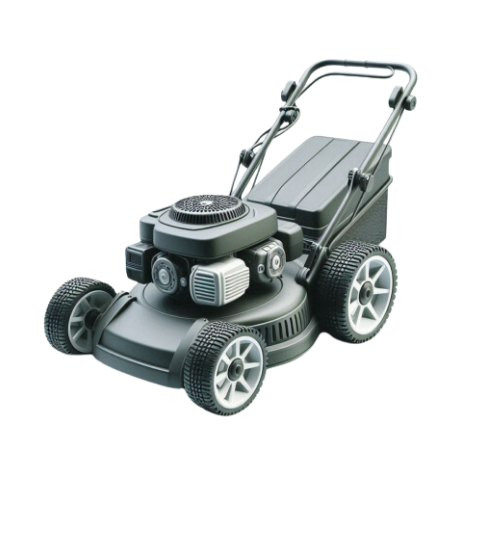
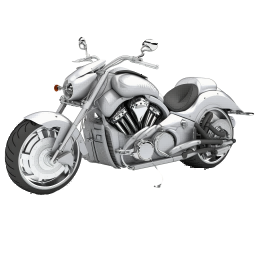
In the field of transportation, starter power is widely used in a variety of outdoor power equipment, such as motorbikes, all-terrain vehicles (ATVs), snowmobiles, etc., to provide strong starting ability and stable power support.OUTDO starter batteries have a number of core advantages, which are able to maintain excellent performance in multiple charge/discharge cycles; high power output ensures that the equipment can be quickly started in harsh environments; in addition, the vibration-resistant design makes them suitable for all kinds of complex road conditions, car models and harsh climates to ensure reliable operation of light vehicles. In addition, the vibration-resistant design of OUTDO starter batteries makes them suitable for all kinds of complex road conditions, car models and harsh climates, ensuring the reliable operation of light vehicles.
MORE

Lightweight Power Battery Solution
OUTDO lightweight power batteries are widely used in light transport vehicles such as two-wheelers, three-wheeled power assisted vehicles and golf carts to provide stable power support. Featuring high energy density and lightweight design, they can extend the range and improve the power performance of vehicles. In addition, OUTDO lightweight power battery has excellent charging and discharging efficiency and low-temperature starting ability, which can maintain stable performance even in cold environments.
OUTDO batteries also have good durability and can withstand frequent use and complex road conditions, suitable for a variety of daily and special application scenarios. Whether in urban commuting or outdoor sports, the lightweight power battery provides an highly efficient and environmentally friendly power solution for two-wheeled vehicles and golf carts, significantly enhancing the user experience.Industrial Applications
Provide sustainable and innovative solutions

Industrial Power Solution
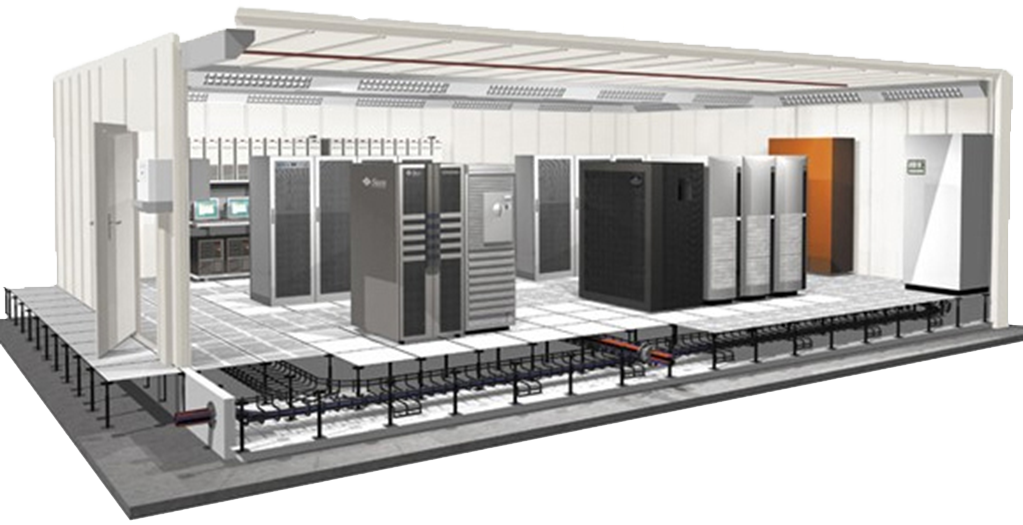
Industrial back-up power solutions are vital to an enterprise's data room, especially when it comes to ensuring the need for continuous, secure power supply. Uninterruptible power supply (UPS) + battery pack, as a commonly used power supply method, guarantees the stable operation of equipment with its unique advantages.UPS provides highly stable voltage and frequency through the combination of advanced pulse width frequency modulation technology and high-efficiency power devices and is able to quickly switch to a backup energy source during an outage in the external power grid to ensure uninterrupted power. Its high-efficiency inverter system isolates interference from the external power grid and reduces waveform distortion, providing better power protection for critical equipment.OUTDO CORP power battery solutions have been used in many national IDC projects around the globe, and are the first choice for the most ideal and secure power supply protection for modern IDC server rooms.

Energy Storage System Solution
The energy storage system provides a stable and efficient power management solution for home/industry and other areas through intelligent energy storage technology, which is especially suitable for homes with integrated solar and other renewable energy sources. The new OUTDO home energy storage system we offer has the advantages of safety, high energy density, long lifetime, innovative design, small footprint, etc. It can be easily installed in indoor garages or other small CBD office areas to achieve intelligent storage and distribution of electricity. When electricity prices are low or PV generation is abundant, the batteries can store excess power and release it during grid peaks or blackouts, ensuring a continuous and stable supply of electricity in multiple areas.
-

<svg t="1709037577113" class="icon" viewBox="0 0 1025 1024" version="1.1" xmlns="http://www.w3.org/2000/svg" p-id="6839" width="200" height="200"><path d="M919.307378 0 104.692622 0C46.925334 0 0 46.812397 0 104.692622L0 919.307378c0 57.880225 46.925334 104.692622 104.692622 104.692622L919.307378 1024c57.880225 0 104.805559-46.755928 104.805559-104.692622L1024.112937 104.692622C1024.112937 46.812397 977.187603 0 919.307378 0zM901.463329 225.478769c0 0-151.617955-55.339142-151.617955 57.259071l0 85.041579 147.891033 0-13.100695 140.493658-134.790339 0 0 478.796515-181.150987 0L568.694386 508.273078 479.925885 508.273078 479.925885 367.77942l88.768501 0L568.694386 282.737841 568.694386 220.001323c0 0-1.863461-114.122863 146.987537-146.987537 104.466748-23.15209 206.053601 10.220801 206.053601 10.220801L901.463329 225.478769z" p-id="6840"></path></svg>
View more<svg t="1709037647549" class="icon" viewBox="0 0 1024 1024" version="1.1" xmlns="http://www.w3.org/2000/svg" p-id="7941" width="200" height="200"><path d="M919.759462 318.994613c0-9.605475-0.184234-19.102577-0.608696-28.534655 41.060787-30.595551 76.68666-68.894629 104.863684-112.720738a403.247526 403.247526 0 0 1-120.68436 33.017692c43.401647-26.708567 76.68666-69.423851 92.415219-120.68436-40.638132 24.645865-85.589515 42.265535-133.383889 51.446549-38.295465-43.575045-92.944441-71.329413-153.358869-72.360764-116.027926-1.918205-210.084998 96.132418-210.084999 218.973404 0 17.460724 1.826088 34.394031 5.451171 50.745736-174.722834-11.243716-329.55016-102.190479-433.116978-239.293373-18.071226 32.847907-28.438925 71.237296-28.438925 112.377556 0 77.811934 37.090717 146.970271 93.44657 187.779994-34.500598-1.560574-66.819283-12.009553-95.166091-29.141545v2.85744c0 108.752474 72.440238 199.870827 168.560013 221.13003-17.621477 5.012259-36.207475 7.62044-55.322696 7.526516a191.542349 191.542349 0 0 1-39.500214-4.325895c26.708567 89.120675 104.332655 154.231274 196.231295 156.400543-71.923659 59.635948-162.525433 95.258208-260.892145 95.00895-16.960401 0-33.720311-1.137918-50.15149-3.200621 93.011271 63.80109 203.418242 100.960443 322.104923 100.960443 386.350343 0.092117 597.636477-336.191629 597.636477-627.962902z" fill="#231815" p-id="7942"></path></svg>
View more<svg t="1709037821478" class="icon" viewBox="0 0 1024 1024" version="1.1" xmlns="http://www.w3.org/2000/svg" p-id="12166" width="200" height="200"><path d="M260.096 155.648c0 27.307008-9.899008 50.516992-29.696 69.632-19.796992 19.115008-45.396992 28.672-76.8 28.672-30.036992 0-54.612992-9.556992-73.728-28.672-19.115008-19.115008-28.672-42.324992-28.672-69.632 0-28.672 9.556992-52.224 28.672-70.656 19.115008-18.432 44.372992-27.648 75.776-27.648 31.403008 0 56.32 9.216 74.752 27.648 18.432 18.432 28.331008 41.984 29.696 70.656 0 0 0 0 0 0m-202.752 808.96c0 0 0-632.832 0-632.832 0 0 196.608 0 196.608 0 0 0 0 632.832 0 632.832 0 0-196.608 0-196.608 0 0 0 0 0 0 0m313.344-430.08c0-58.708992-1.364992-126.292992-4.096-202.752 0 0 169.984 0 169.984 0 0 0 10.24 88.064 10.24 88.064 0 0 4.096 0 4.096 0 40.96-68.267008 105.812992-102.4 194.56-102.4 68.267008 0 123.220992 22.868992 164.864 68.608 41.643008 45.739008 62.464 113.664 62.464 203.776 0 0 0 374.784 0 374.784 0 0-196.608 0-196.608 0 0 0 0-350.208 0-350.208 0-91.476992-33.451008-137.216-100.352-137.216-47.787008 0-81.236992 24.576-100.352 73.728-4.096 8.192-6.144 24.576-6.144 49.152 0 0 0 364.544 0 364.544 0 0-198.656 0-198.656 0 0 0 0-430.08 0-430.08 0 0 0 0 0 0" fill="#272636" p-id="12167"></path></svg>
View more<svg t="1709037745931" class="icon" viewBox="0 0 1024 1024" version="1.1" xmlns="http://www.w3.org/2000/svg" p-id="10005" width="200" height="200"><path d="M512 359.657143c-83.885714 0-152.342857 68.457143-152.342857 152.342857S428.114286 664.342857 512 664.342857 664.342857 595.885714 664.342857 512 595.885714 359.657143 512 359.657143zM968.914286 512c0-63.085714 0.571429-125.6-2.971429-188.571429-3.542857-73.142857-20.228571-138.057143-73.714286-191.542857-53.6-53.6-118.4-70.171429-191.542857-73.714285-63.085714-3.542857-125.6-2.971429-188.571428-2.971429-63.085714 0-125.6-0.571429-188.571429 2.971429-73.142857 3.542857-138.057143 20.228571-191.542857 73.714285C78.4 185.485714 61.828571 250.285714 58.285714 323.428571c-3.542857 63.085714-2.971429 125.6-2.971428 188.571429s-0.571429 125.6 2.971428 188.571429c3.542857 73.142857 20.228571 138.057143 73.714286 191.542857 53.6 53.6 118.4 70.171429 191.542857 73.714285 63.085714 3.542857 125.6 2.971429 188.571429 2.971429 63.085714 0 125.6 0.571429 188.571428-2.971429 73.142857-3.542857 138.057143-20.228571 191.542857-73.714285 53.6-53.6 70.171429-118.4 73.714286-191.542857 3.657143-62.971429 2.971429-125.485714 2.971429-188.571429zM512 746.4c-129.714286 0-234.4-104.685714-234.4-234.4S382.285714 277.6 512 277.6 746.4 382.285714 746.4 512 641.714286 746.4 512 746.4z m244-423.657143c-30.285714 0-54.742857-24.457143-54.742857-54.742857s24.457143-54.742857 54.742857-54.742857 54.742857 24.457143 54.742857 54.742857a54.674286 54.674286 0 0 1-54.742857 54.742857z" p-id="10006"></path></svg>
View more<svg t="1734743183044" class="icon" viewBox="0 0 1024 1024" version="1.1" xmlns="http://www.w3.org/2000/svg" p-id="4454" width="200" height="200"><path d="M832 128l-640 0c-105.59488 0-192 86.40512-192 192l0 384c0 105.59488 86.40512 192 192 192l640 0c105.59488 0 192-86.40512 192-192l0-384c0-105.59488-86.40512-192-192-192zM384 768l0-512 320 256-320 256z" fill="#d81e06" p-id="4455"></path></svg>
View more






How To Change Your Motorcycle Battery: A Step-by-Step Instruction
Release time:
2025-07-07
Share:
how to remove a motorcycle battery
Knowing how to replace a motorcycle battery is important for all motorcycle riders. Motorcycle batteries need to be replaced every 3-5 years to ensure optimal driving performance. Check out the following step by step guide to see if you done it right.
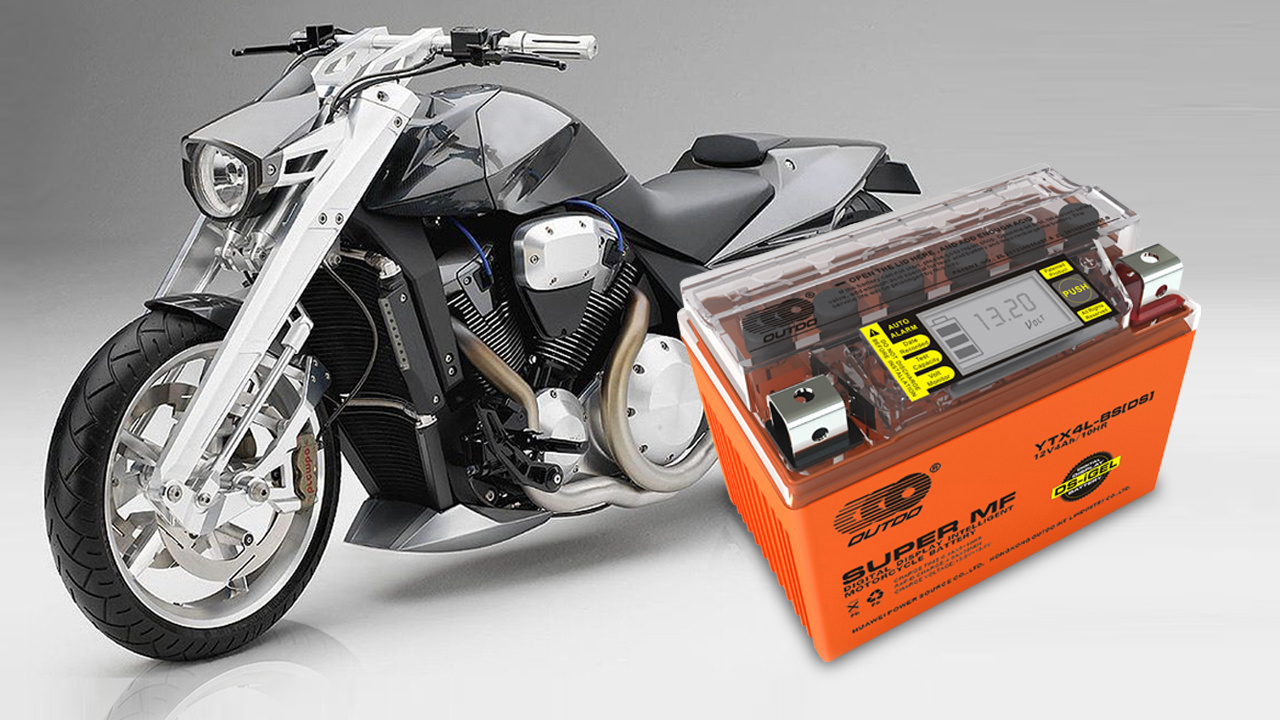
►STEP 1. Before replace motorcycle battery - Should you change your battery now, or just recharge it?
A good battery should meet the following requirements:
1. A Quick and Smooth Start
The starting sound is the most critical indication of whether your battery is in good shape or not. It feels like it starts with a “Bang”, not a "Click"... Click... Click... Da-da-da-da..." This is a slow, weak, and dragging sound. Even in cold weather, the start should be relatively smooth and strong (of course, a little slower than in warm weather).
2. Stable and Bright Dashboard
When you switch the electric start, the indicator lights on the dashboard should be fully lit, without any obvious dimming or flashing. The lights may dim slightly for a brief period of startup, as the starter motor draws a large amount of current, but it should not go out completely or flicker violently.
3. Loud and Clear Horn
When you press the horn, the sound should be loud, clear, and powerful, not hoarse, weak, or breathless.
4. Bright and Stable Lights
When idling or driving at low speeds, the headlights should maintain a stable brightness and will not flicker with changes in rpm (slight fluctuations are normal for old motorcycles). Most motorcycles use maintenance-free lead-acid batteries, their lifespan could be 2-4 years. If your battery is also a lead-acid battery and has been in use for more than 2 years, then the problem may just be that your battery has run out of life, and you should just replace it.
5. Check Your Battery With a Multimeter
Of course, these signs give you a rough idea. To be absolutely sure whether your battery is weak or already failing, you'll need to check it with a multimeter. The full voltage of a lead-acid motorcycle battery is between 12.95 and 13.2V, so you should turn the meter to the 20V range. Then, engage the positive probe of the multimeter with the positive terminal of the battery, and the negative probe with the negative terminal.
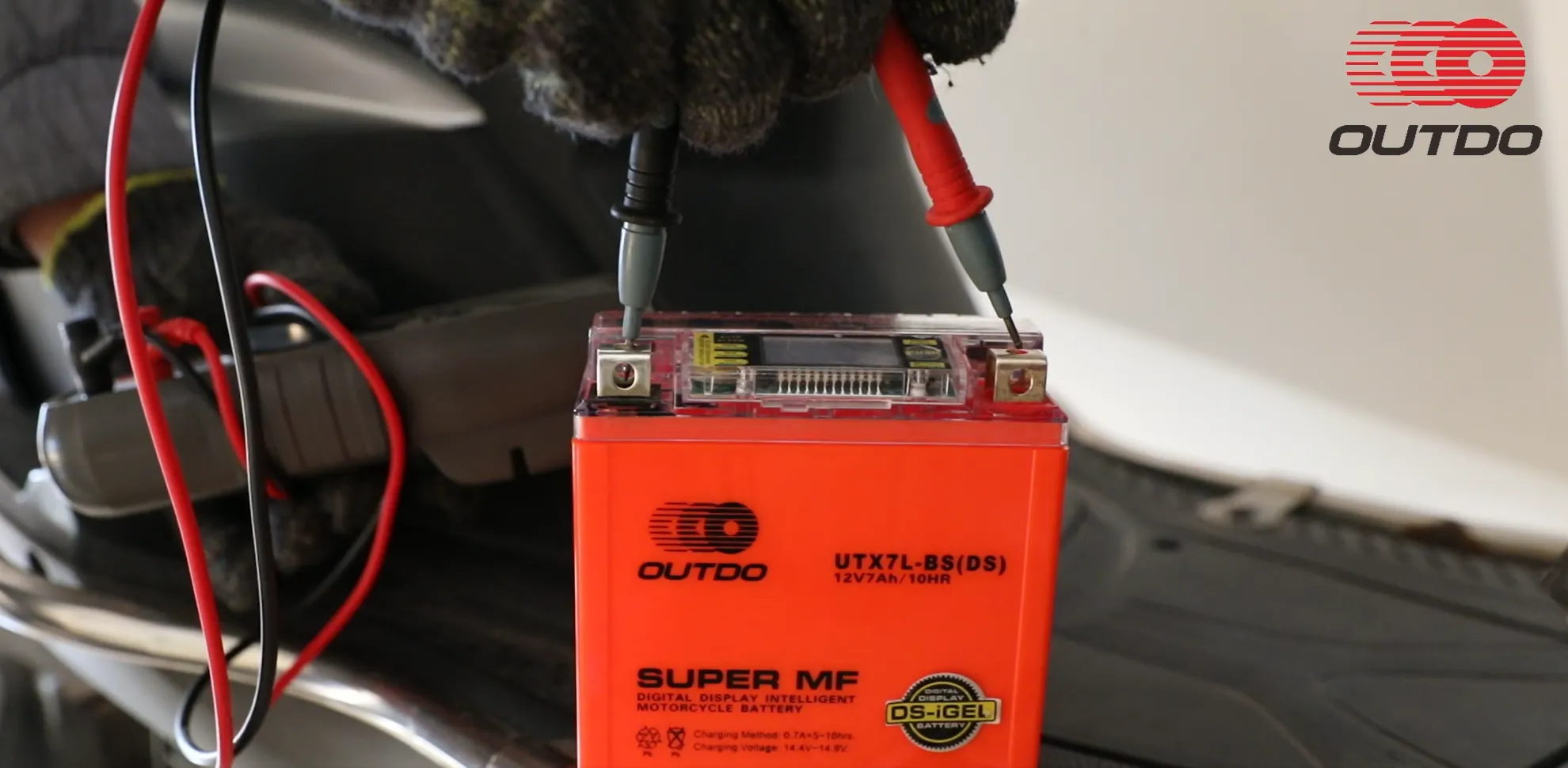
When you get the reading, check the battery voltage guide below (for lead-acid batteries):
| Voltage Reading | Battery Power | Meaning |
|---|---|---|
| 12.6V - 13.2V | 75%-100% | If the motorcycle has difficulty starting, the problem may not be the battery (starter motor, wiring, ignition system, etc.) |
| 12.4V - 12.6V | 50%-75% | Use or recharge according to your needs. |
| 12.2V - 12.4V | 25%-50% | Requires charging. |
| 12.0V - 12.2V | <25% | Severe low power, must be charged immediately. |
| Below 12.0V | Deeply discharged | The battery may already be damaged. |
Note: Voltage only reflects the current charge level, it does not reflect the health of the battery. An aging bad battery may also have 12.6V (dummy charge) but drops quickly.
Digital display battery come with a screen showing its power. It will save your time on voltage tests.
If you confirmed that you need to replace the battery, follow the motorcycle battery installation instruction below.
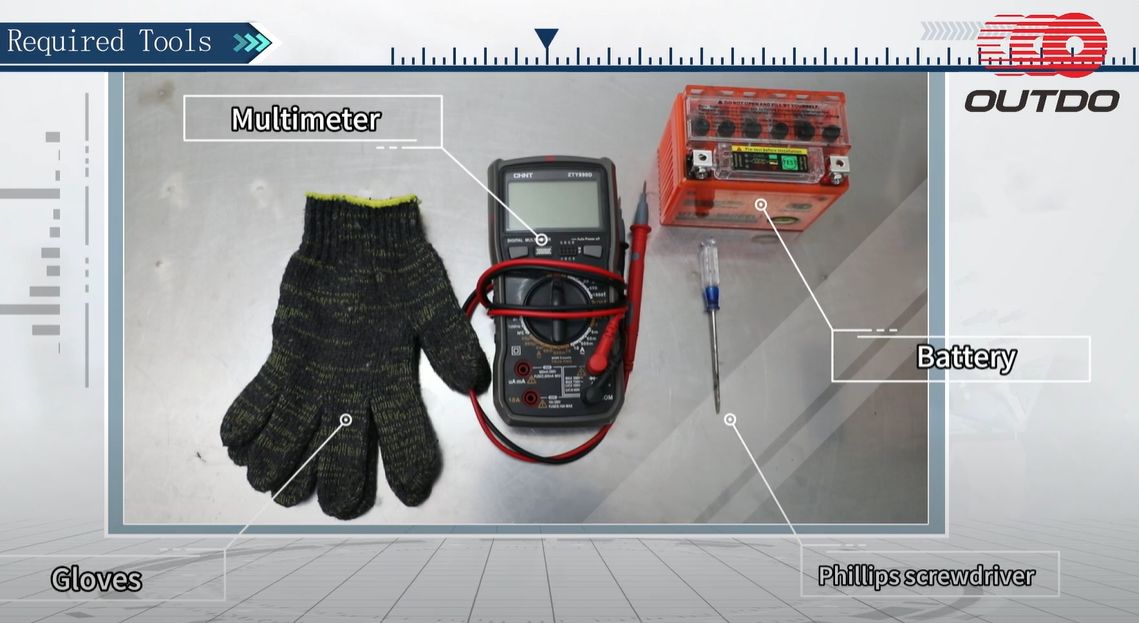
►STEP 2. Motorcycle battery installation - Prepare the tools
Prepare the following tools:
1. Screwdriver
2. Gloves
3. Multimeter
4. New Battery (Here we choose OUTDO DS-iGEL battery)
►STEP 3. How to Remove a Motorcycle Battery Safely
Motorcycle batteries are installed in different locations depending on the model. On many bikes, they're placed under the seat, but on others, you might find them behind a side panel, under the fuel tank, or near the rear fender. Some motorcycles may have batteries hidden in unusual locations, such as inside the upper fairing, between pulleys, or under the frame. To know exactly how to remove battery from motorcycle, always refer to your owner's manual. Here's the HONDA & YAMAHA User Manual you might need ⇒ Honda Motorcycle User Manual; ⇒ YAMAHA Motorcycle User Manual.
On some motorcycles, batteries are secured with clips, connector plugs, or protective terminal covers. Always check your owner's manual for instructions on how to remove a motorcycle battery. Even if you're familiar with battery removal, the manual provides model-specific guidance and safety tips to help prevent damage.
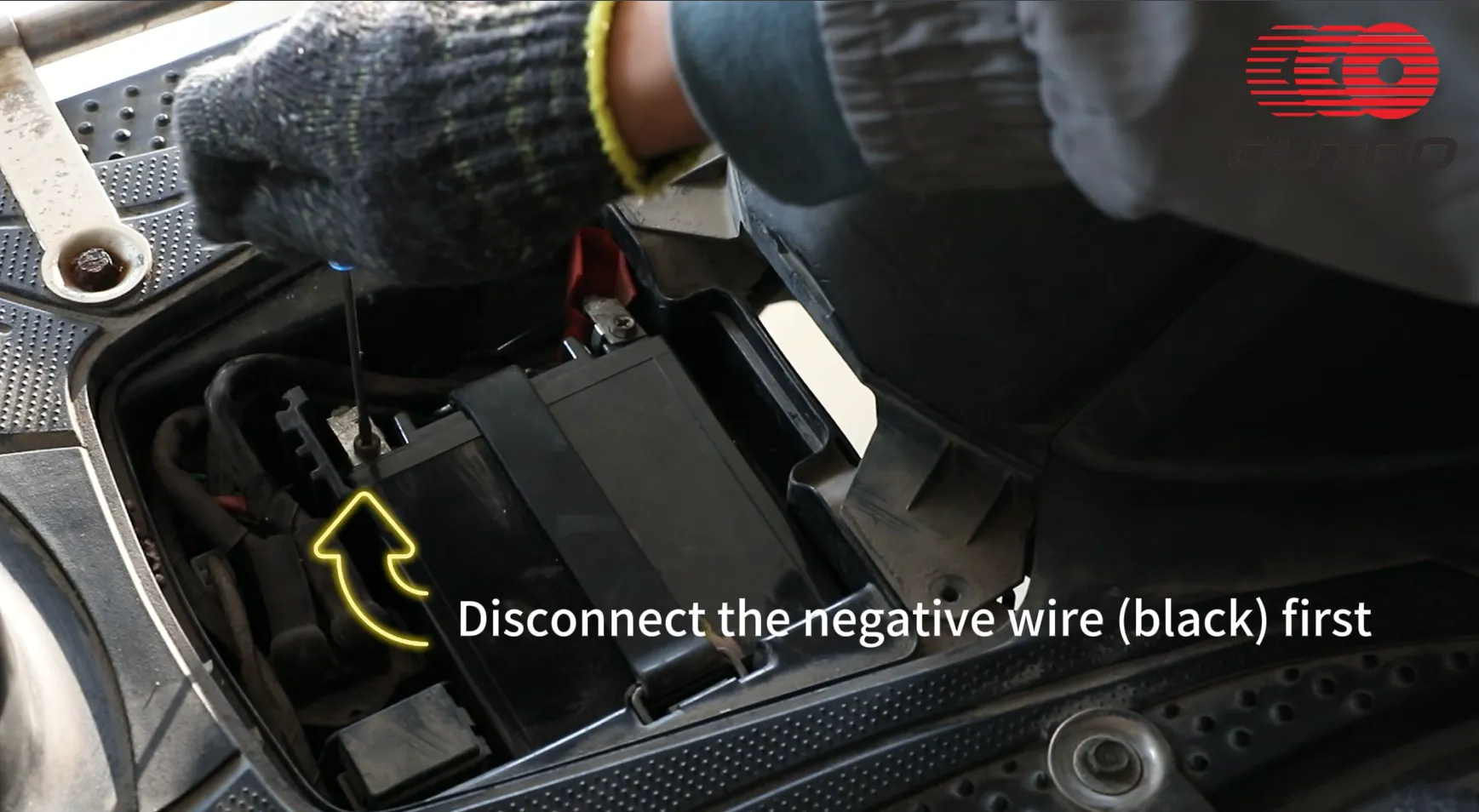
Once you've removed any covers, retaining brackets, or clamps, you should see the two battery terminals: negative (–) and positive (+).
Disconnect the Negative (-) Cable First
-
Usually marked black.
-
This is critical because keeping the negative disconnected ensures that if your tool touches the frame or any metal part while handling the positive terminal, it won't cause a short circuit or spark.
Disconnect the Positive (+) Cable
-
Usually marked red.
-
Be careful: the positive terminal is live, and if your tool touches the bike's metal parts (ground), it could create sparks or even cause burns.
-
Never disconnect the positive first, or you risk an immediate short circuit.
Lift up the Battery
-
Be careful when lifting the battery, as some terminals are hollow and inside there are nuts can fall out. Hold them in place and carefully lift the old battery out.
-
Keeping the battery upright to avoid spills if it's a conventional lead-acid battery.
Pro Tips
-
The most common mistake is the nuts falling off, but don't worry about that cause usually new batteries come with two new nuts.
-
If you notice severe corrosion on terminals, it could mean the cable end is compromised, and you may need to trim it or replace the cable.
Once the old battery is out, continue to Step 4: Installing your new motorcycle battery.
►STEP 4. Install the new battery - How to connect motorcycle battery terminals?
Choose the right battery
Check your new battery to see if it matches your original battery's voltage and size. If your lead-acid battery requires filling with acid, do it before installation. Follow the manufacturer's instructions carefully, work in a well-ventilated area or outside.
Connect the cables in correct order
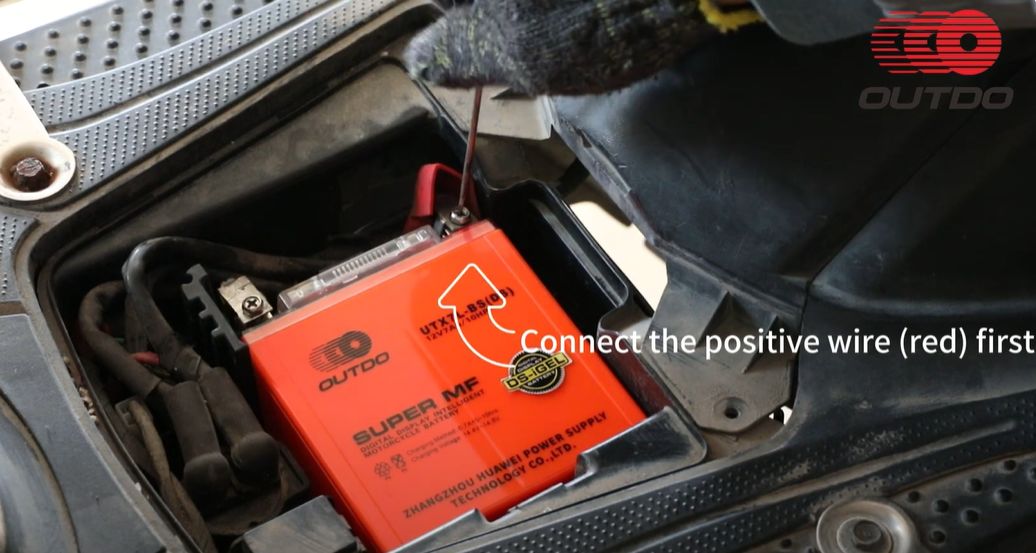
Insert the nuts into the terminals, then attach the positive (+, usually red) cable, then the negative (-, usually black) cable. This prevents accidental short circuits. And make sure you don't connect the terminal with a wrong cable.
Secure the battery
Try shaking the battery to see if it is stable, because the new battery may be of different sizes. If it shakes, add spacers next to it to prevent it from loosening. Before putting the seat or covers back, turn on the ignition to ensure the battery is powering your motorcycle. Then replace any covers and reinstall the seat.
Pro Tips
To prevent future corrosion, you can apply a thin layer of battery terminal spray or grease before reconnecting the cables.
Tighten the nuts snugly, but not excessively. Under-tightening may cause poor contact, while overtightening can damage the terminal
If you have chosen a different type of battery, for example, from lead-acid to lithium, the two batteries will likely not be the same size. You can use EVA foam to fill in the spaces. Check out this article on Motorcycle Batteries Comparison.
Now your motorcycle will start smoothly.
FAQ:
Q:Should I change my battery because my motorcycle battery died after leaving the key on?
If your motorcycle battery died after leaving the key on, you might not need a replacement right away. Try recharging it first. If it won't hold a charge, consider changing it. Learn more here: Motorcycle Battery Dead After Leaving the Key On.
Q: How can I tell if the battery is running low without a meter?
A: We can tell if the battery is fully charged by simply looking at the lights and horn. If the lights are dim and flickering or the horn sounds dull, then it is possible that your battery is running low.
Q: Why won't my motorcycle start in cold weather? Should I replace the battery?
A: Cold slows down the battery's chemistry, so it can't deliver enough power to crank the engine.
-
Lithium batteries lose power the fastest in freezing temps.
-
Lead-acid batteries do a bit better, but still weaken below 0℃.
-
Sodium batteries handle the cold best. Lab tests show they keep over 85% capacity at -18℃, so they still have strong starting power.
If your bike struggles every winter, it's a sign your battery may need replacing. And if you live in a region that stays cold most of the year, a sodium-ion battery is a smart upgrade.
Q: Where do I dispose of the old battery?
A: 1. Retailer's take-back service. 2. Local recycling center. 3. Hazardous waste collection
Q: Should I take the battery off when not riding?
A: Yes, as long as the battery is installed, the electrical system will form a circuit to supply the electronic devices. The battery is still consuming power even though you are not riding. OUTDO Battery suggests removing the battery if you think you won't be riding for more than half a month. Check Part 3 and 4 for how to remove the battery.
FAQ
Zhangzhou Huawei Power Supply Technology Co., Ltd.
Related link:
Official Account
We use optional cookies to improve your experience on our website through social media connections and other means, and place personalized advertisements based on your online activities. If you reject the optional cookies, we will only use the necessary cookies to provide you with the service. Privacy Statement